

Alexandre Lunois (1863-1916) - Colour Lithograph - Danaë (1894)
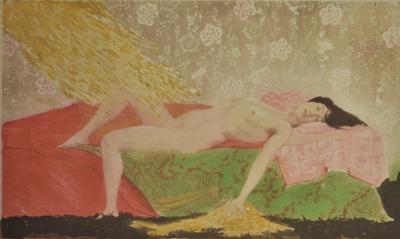
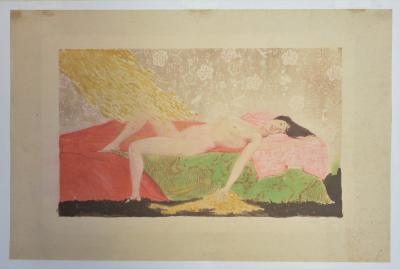
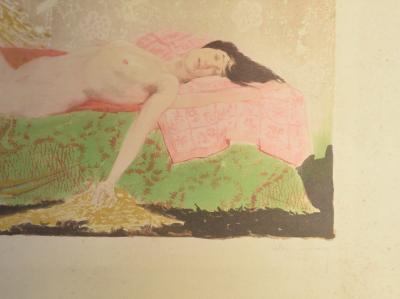
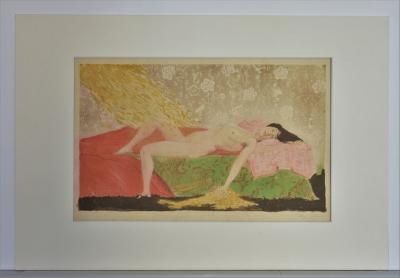
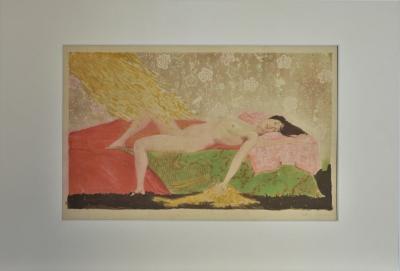
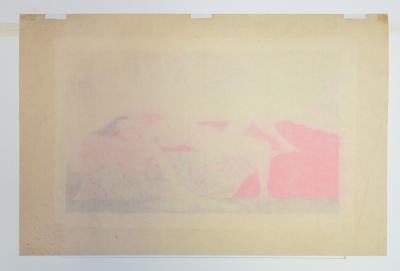
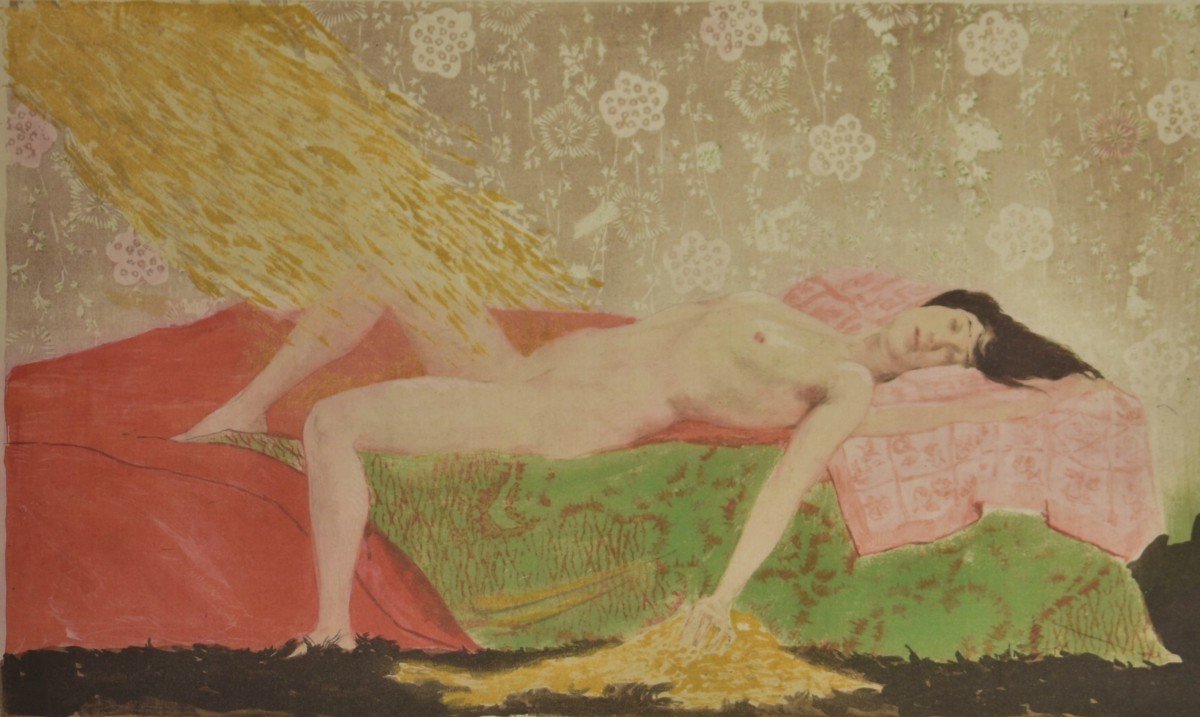
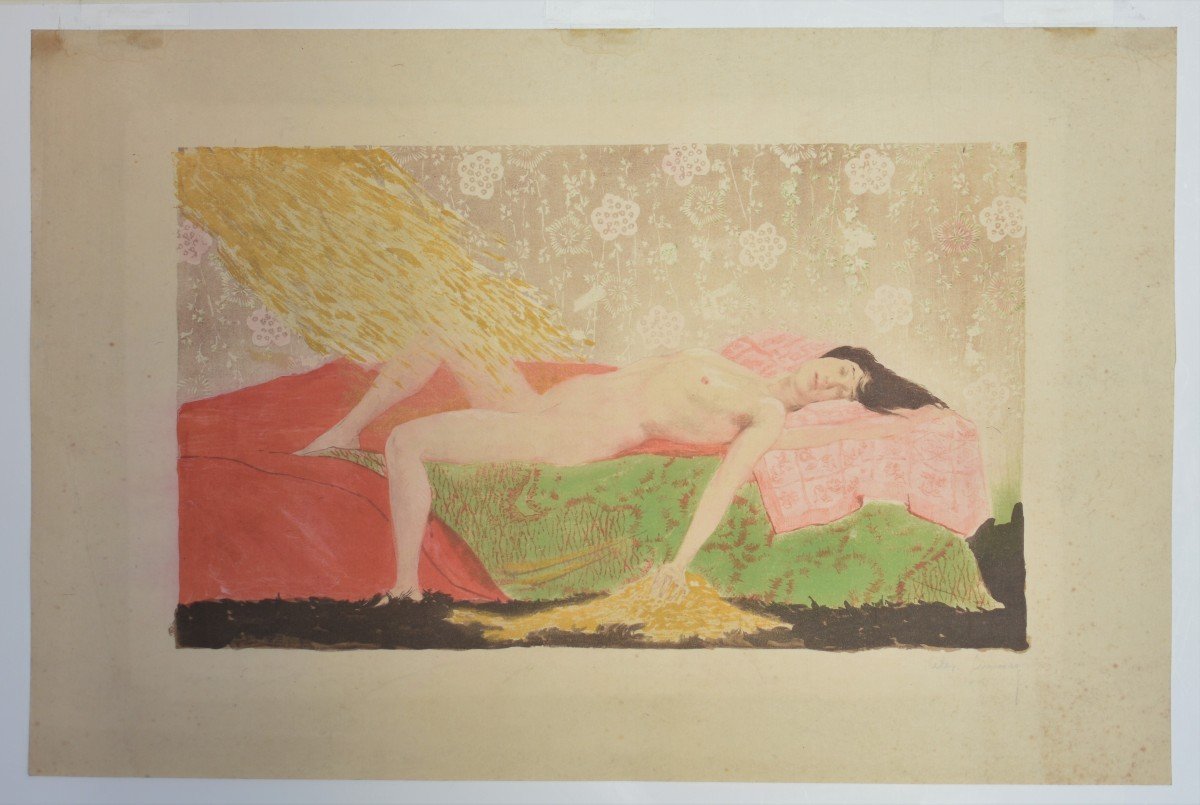
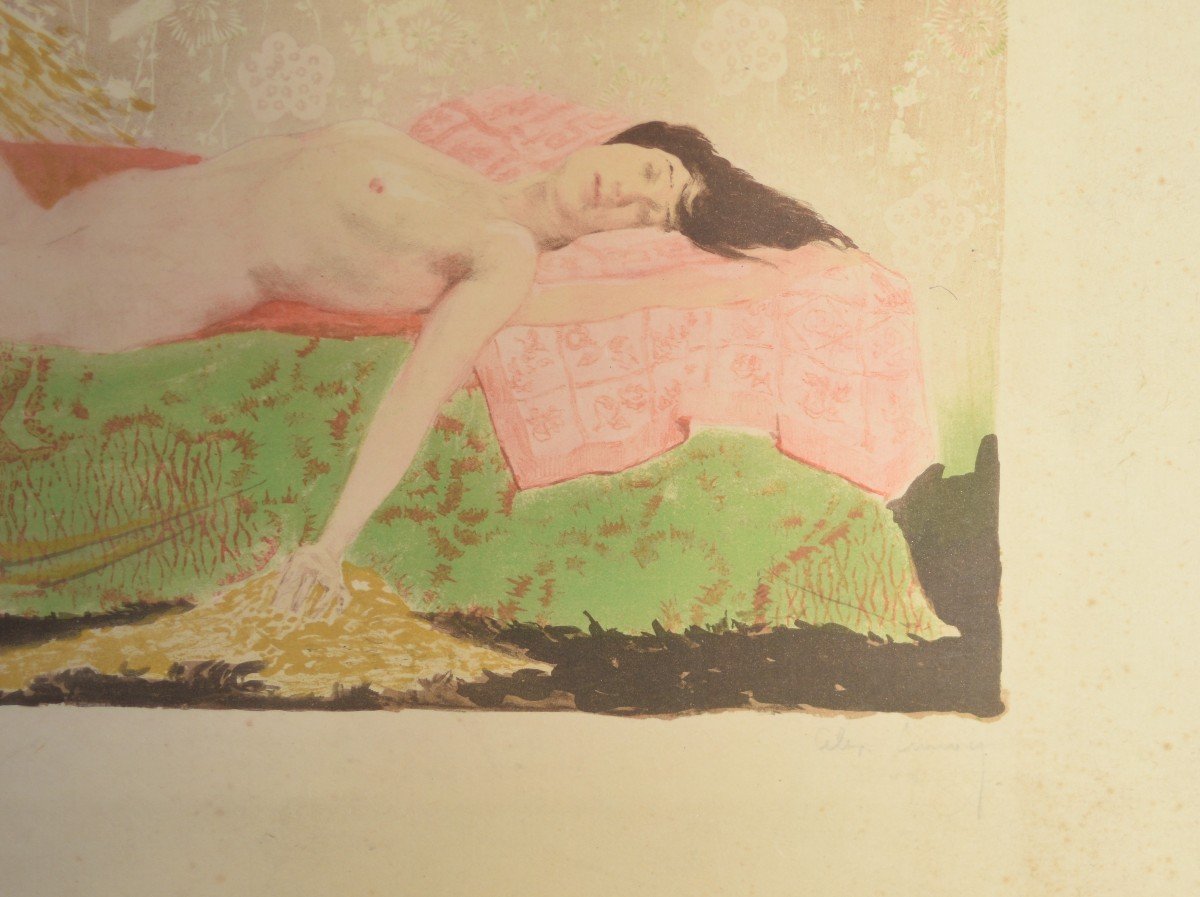
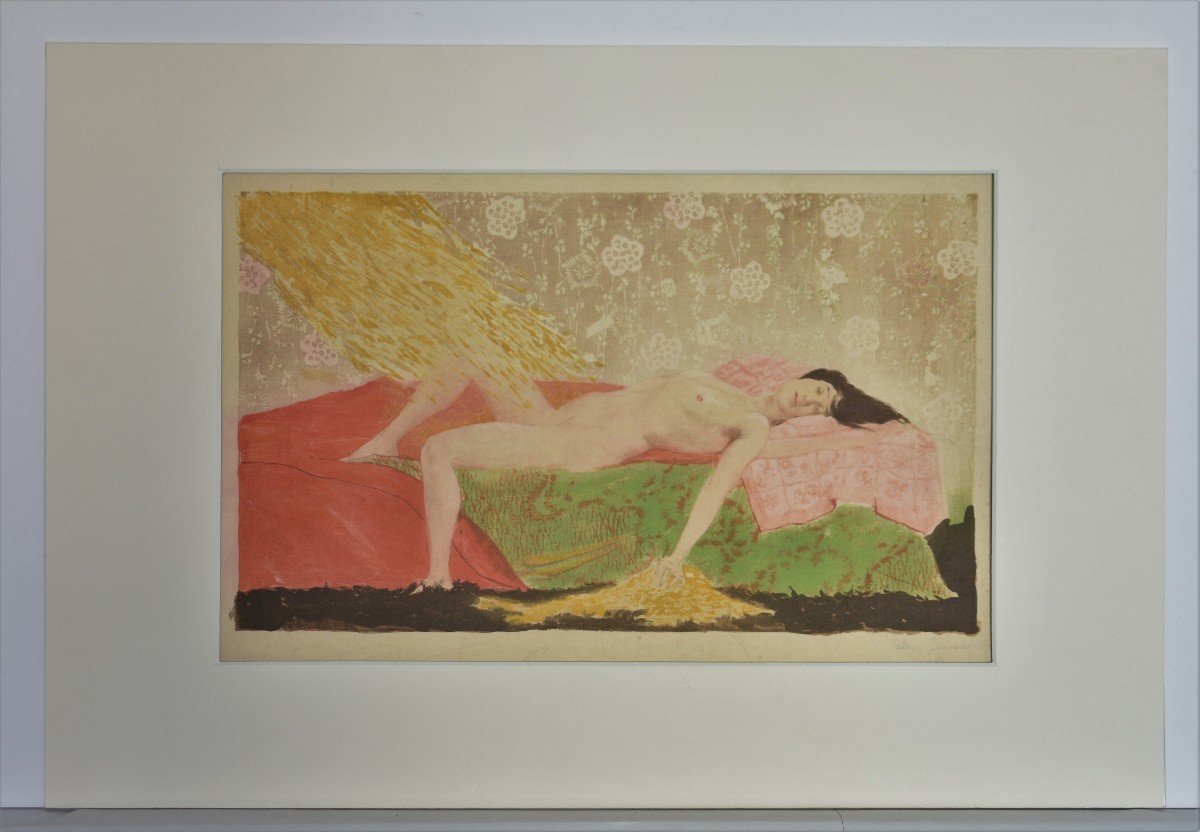
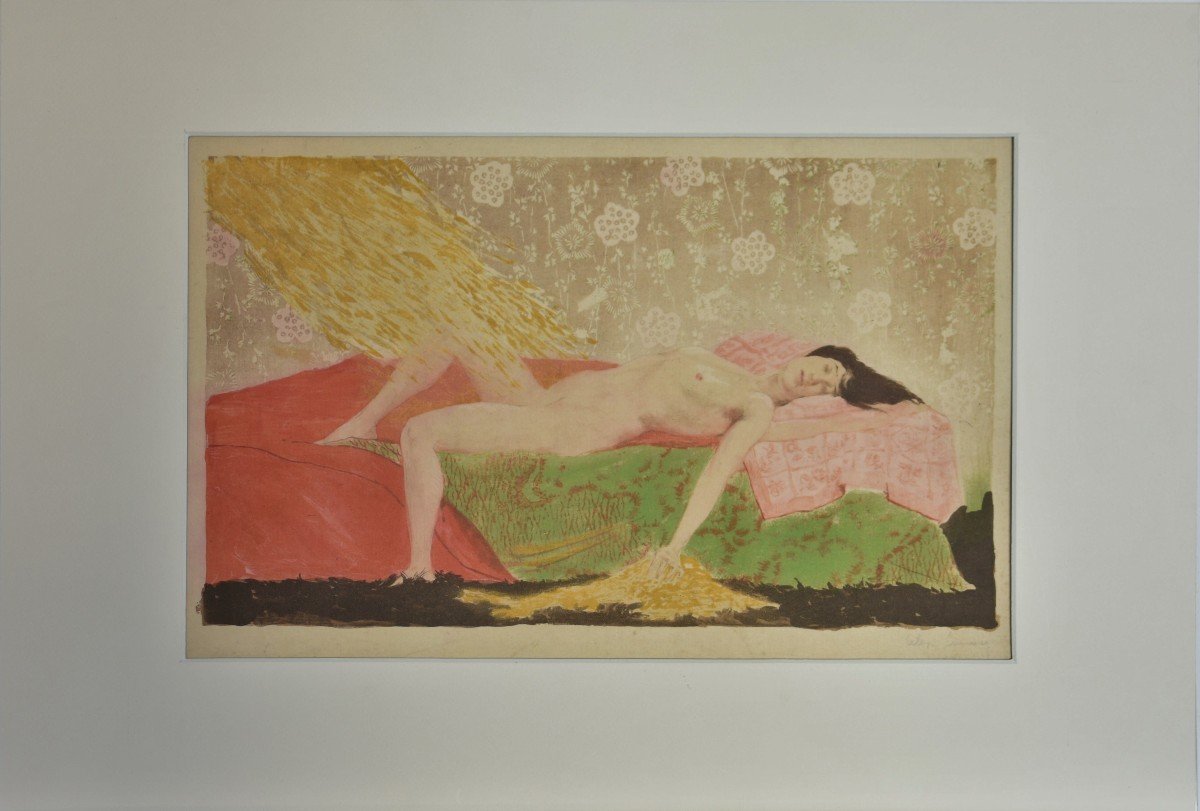
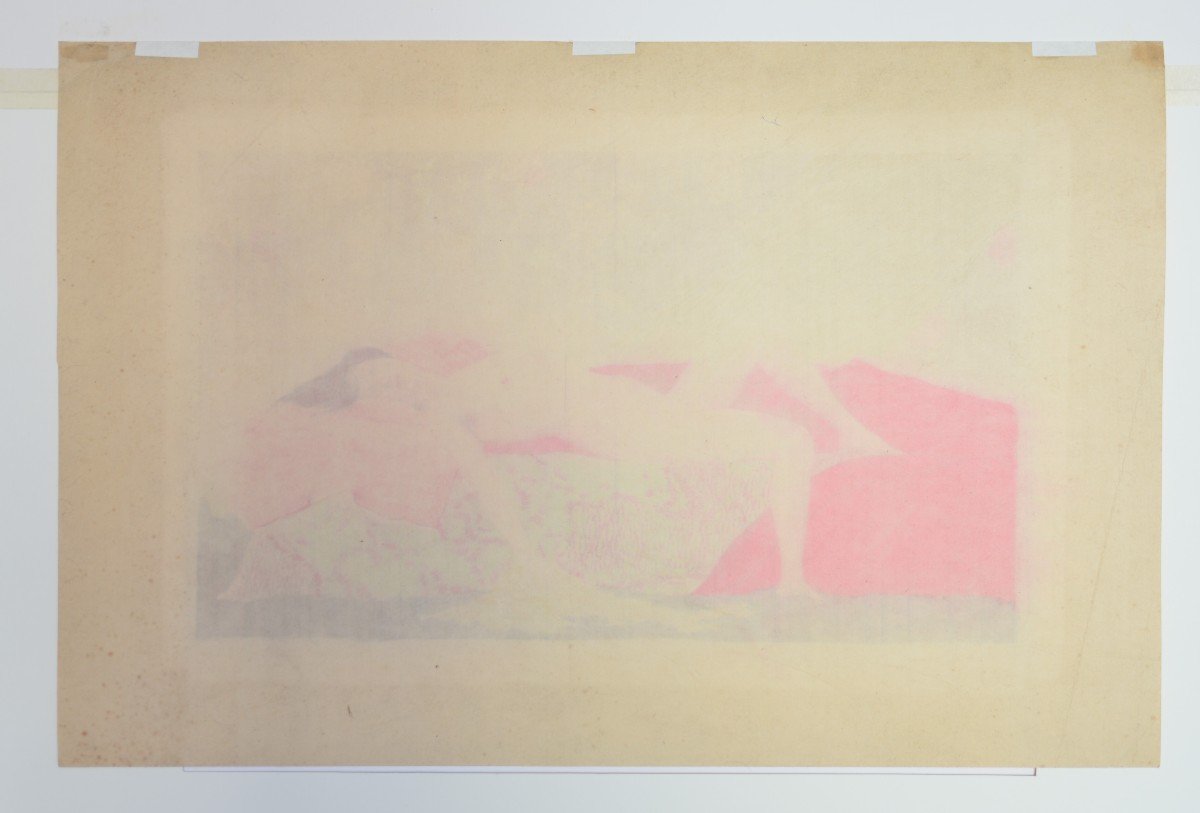

Alexandre Lunois (1863-1916) Danaé 1894 Color lithograph on antique laid Japanese paper Board dimensions: 23.5 x 39.5 cm Sheet dimensions: 34.5 cm x 52.5 cm Passe-partout 40cm x 59cm Traces of foxing on the margins (see photos) Engraver and lithographer Alexandre Lunois was born in Paris. In 1880, he apprenticed with the Parisian printer-lithographer Achille Sirouy, under whose tutelage he produced his first two lithographs and an etching, all after the work of leading artists. These three prints were exhibited at the Salon des Artistes Français in 1882, and Lunois continued to exhibit such works—derived from originals created by masters such as Delacroix, Daumier, and Béraud—until the 1890 Salon. In 1886, Lunois began producing original etchings, and in 1888, he explored the Netherlands, followed by travels through Algeria and Morocco, returning to Paris with a portfolio of sketches and drawings at the end of 1889. He immediately began working with both color and black-and-white lithography and exhibited five black-and-white lithographs at that year's Universal Exposition. He attracted the attention of the renowned art dealer Edmund Sagot, who published his lithographs for the first time. From 1894 onward, he was represented by the gallery owner and publisher Gustave Pellet. Lunois died in Pecq, in the western suburbs of Paris, where he had settled. Works in numerous museums
Dimensions :
- Height : 23,5 cm
- Width : 39,5 cm
Dimensions :
- Height : 23,5 cm
- Width : 39,5 cm
This description has been translated automatically. please click here Click here to display the original language FR
This item is sold by a professional art dealer who guaranties its authenticity. This item is used (second-hand)
For sale
Price :
380 € Incl. VAT
Premium and Taxes included
Delivery France:
14.90 € incl. VAT (*)
Country prices, click on See
See more
Hotline
Please contact us for any question regarding this object. For any other inquiry, we invite you to fill the contact form.
Other items from the category « Alexandre Lunois »
This should also please you
