

Nepal, XVI-XVII secolo, Scultura in legno di Kali nel suo aspetto Chamunda
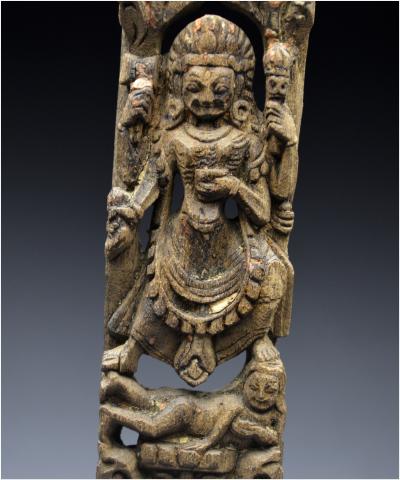
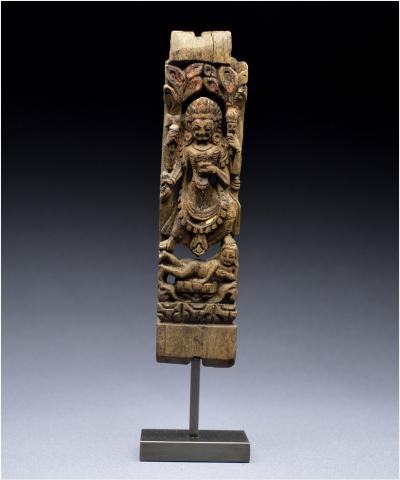
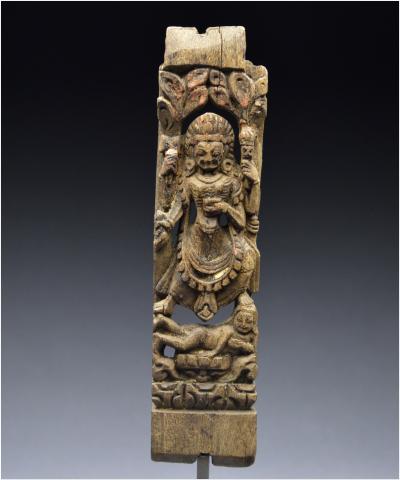
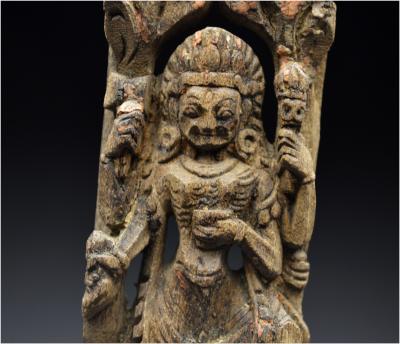
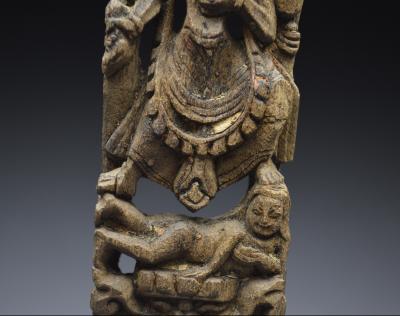
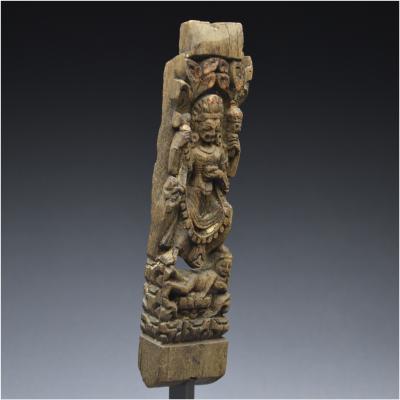
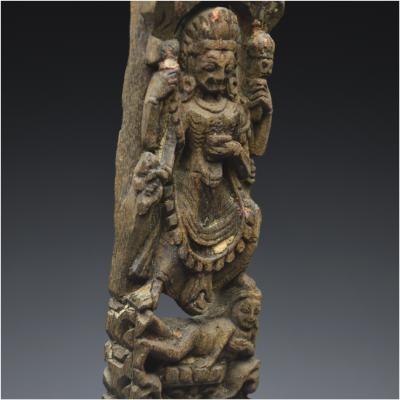
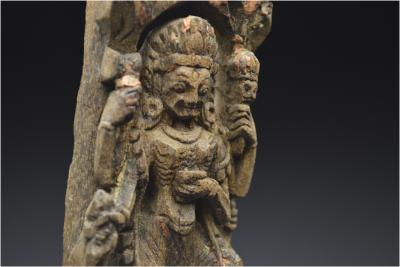
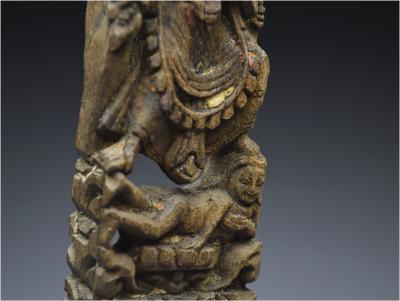
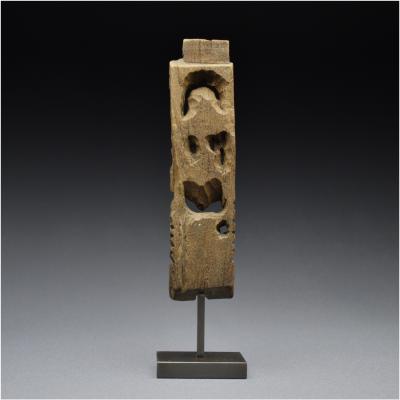
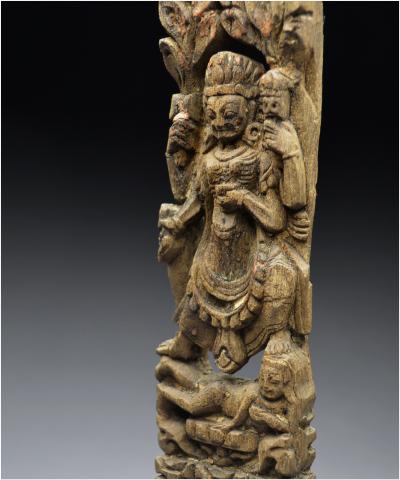
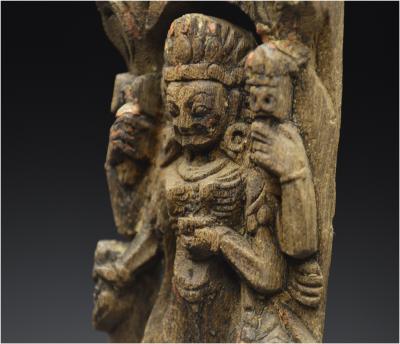
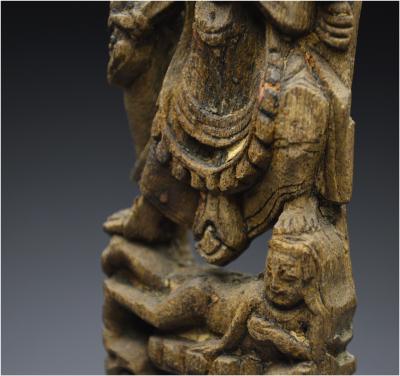
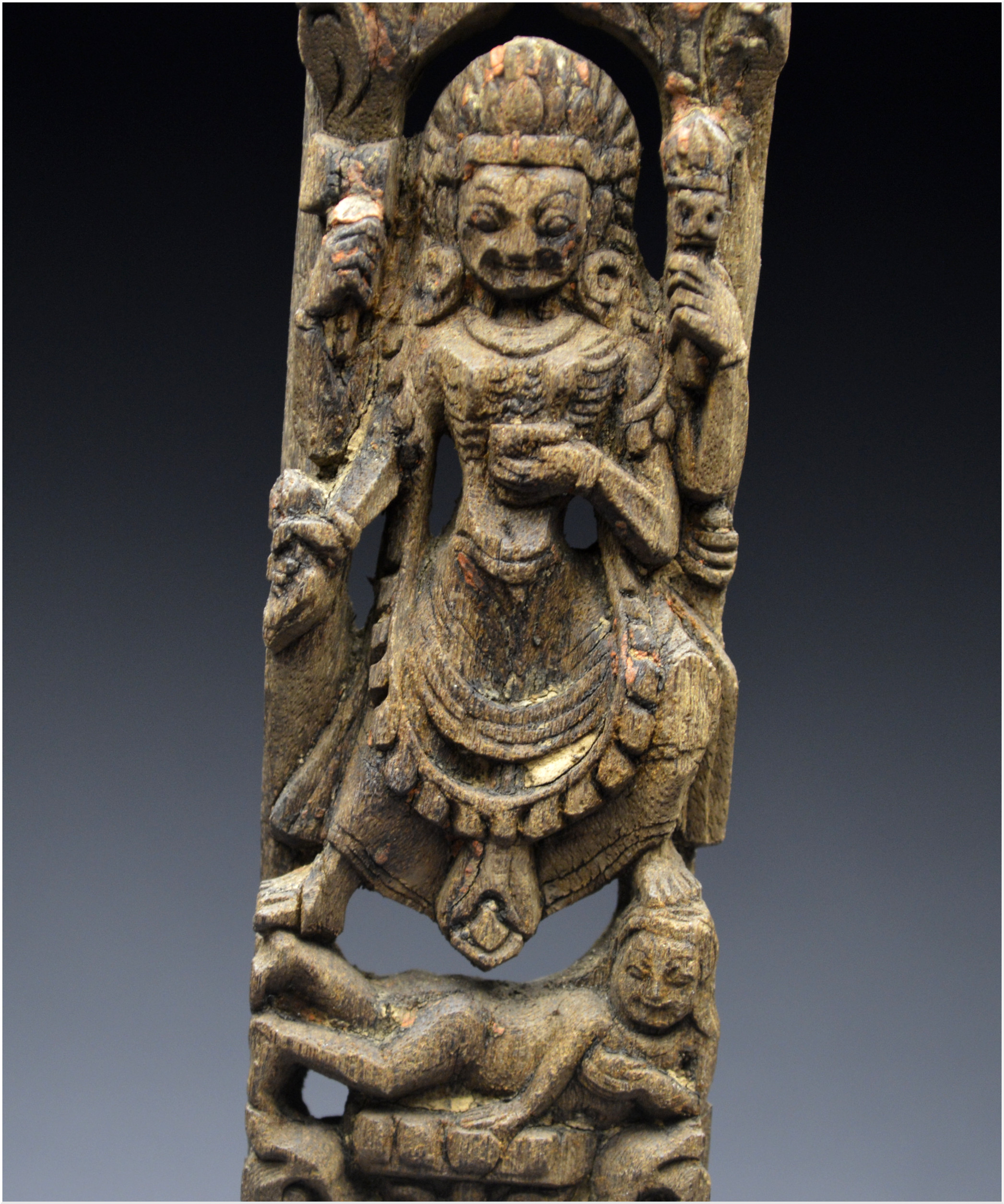
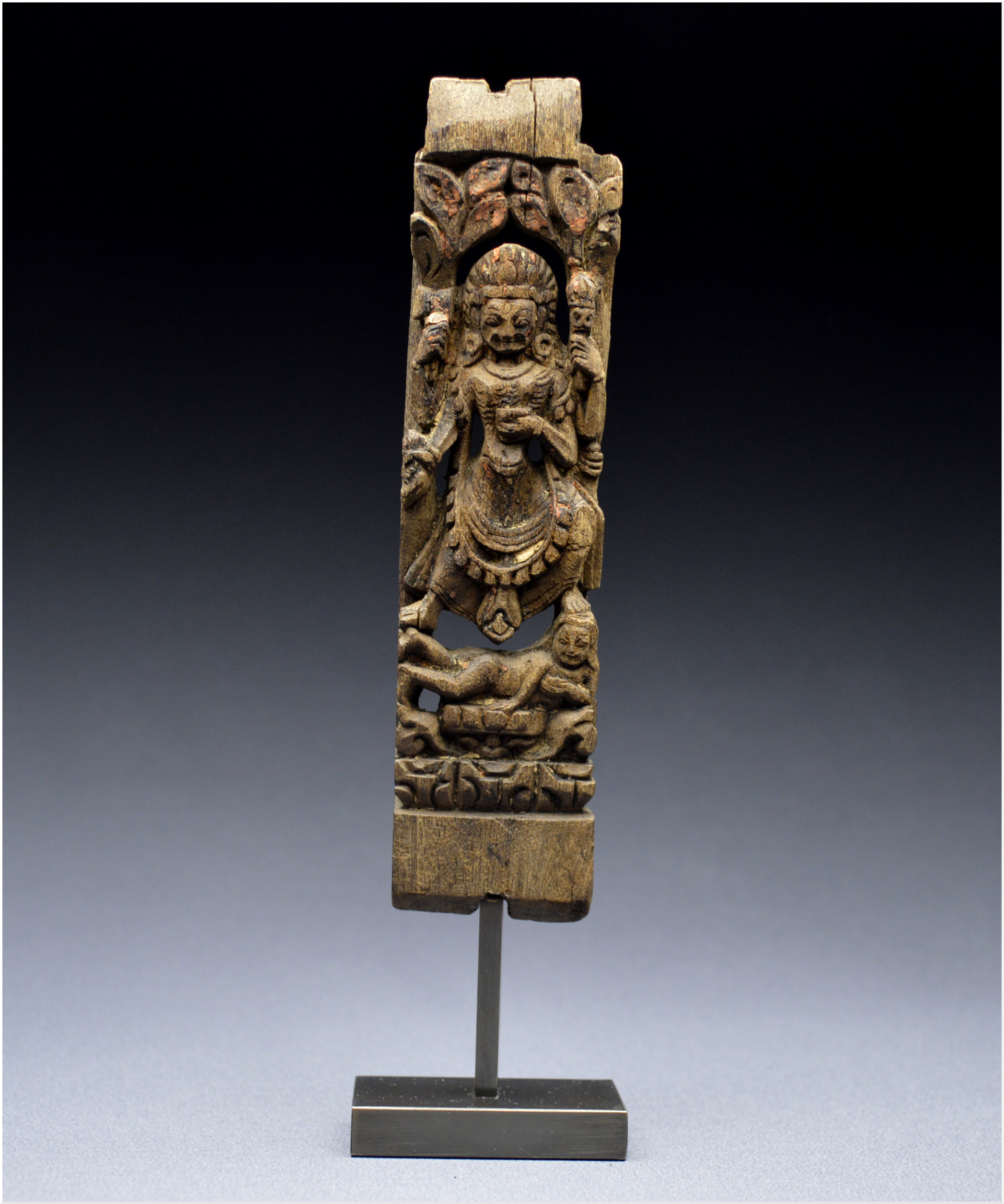
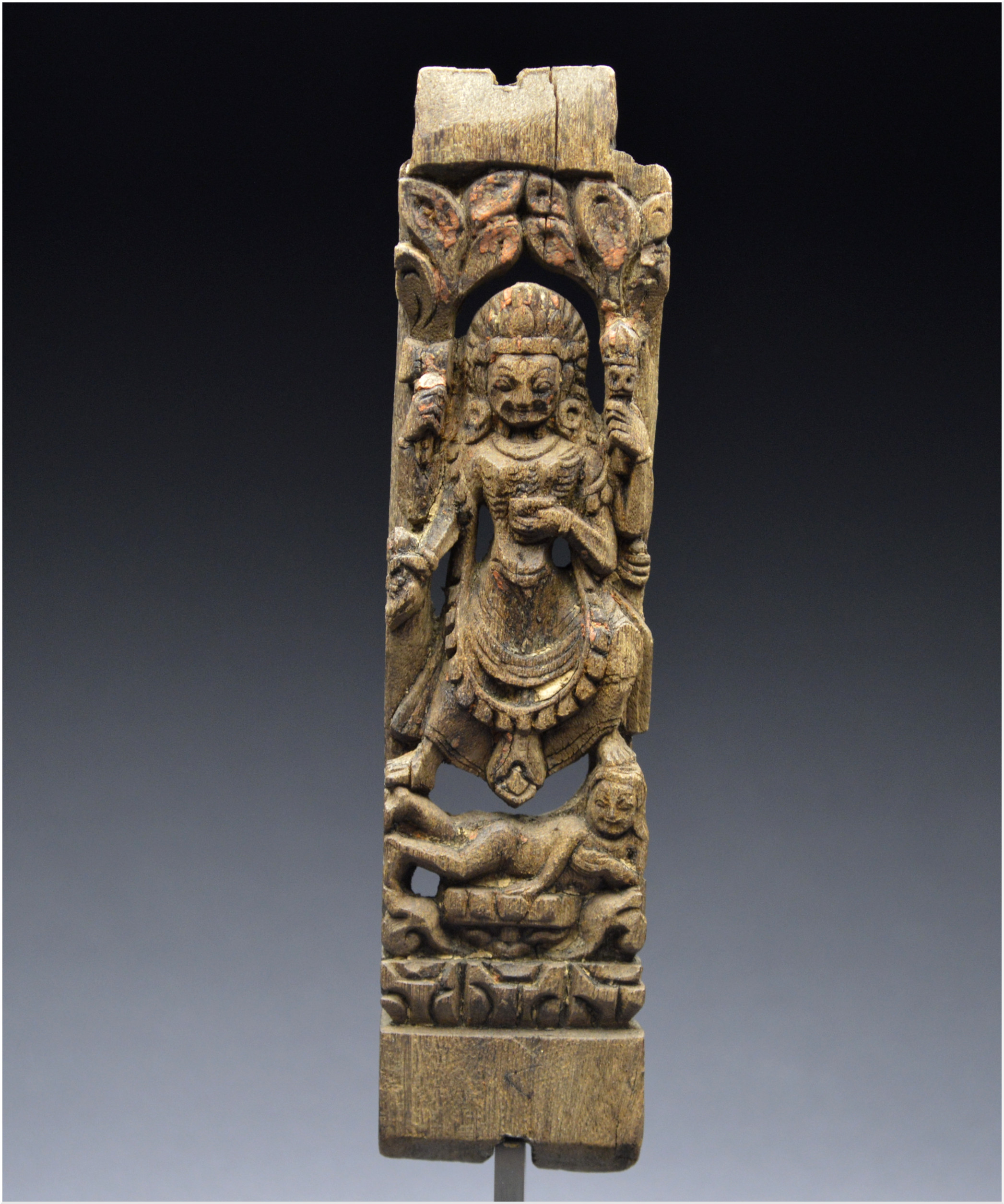


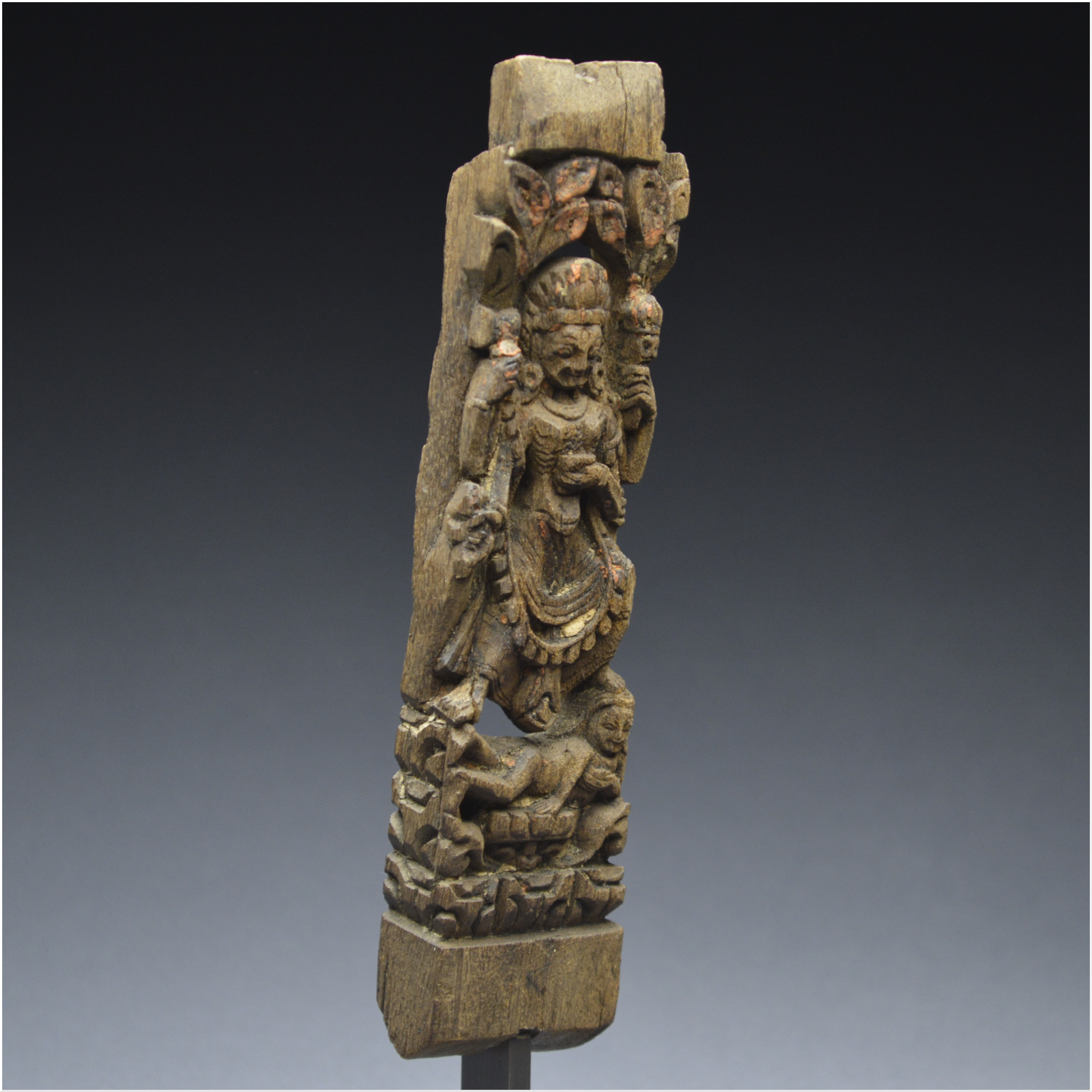
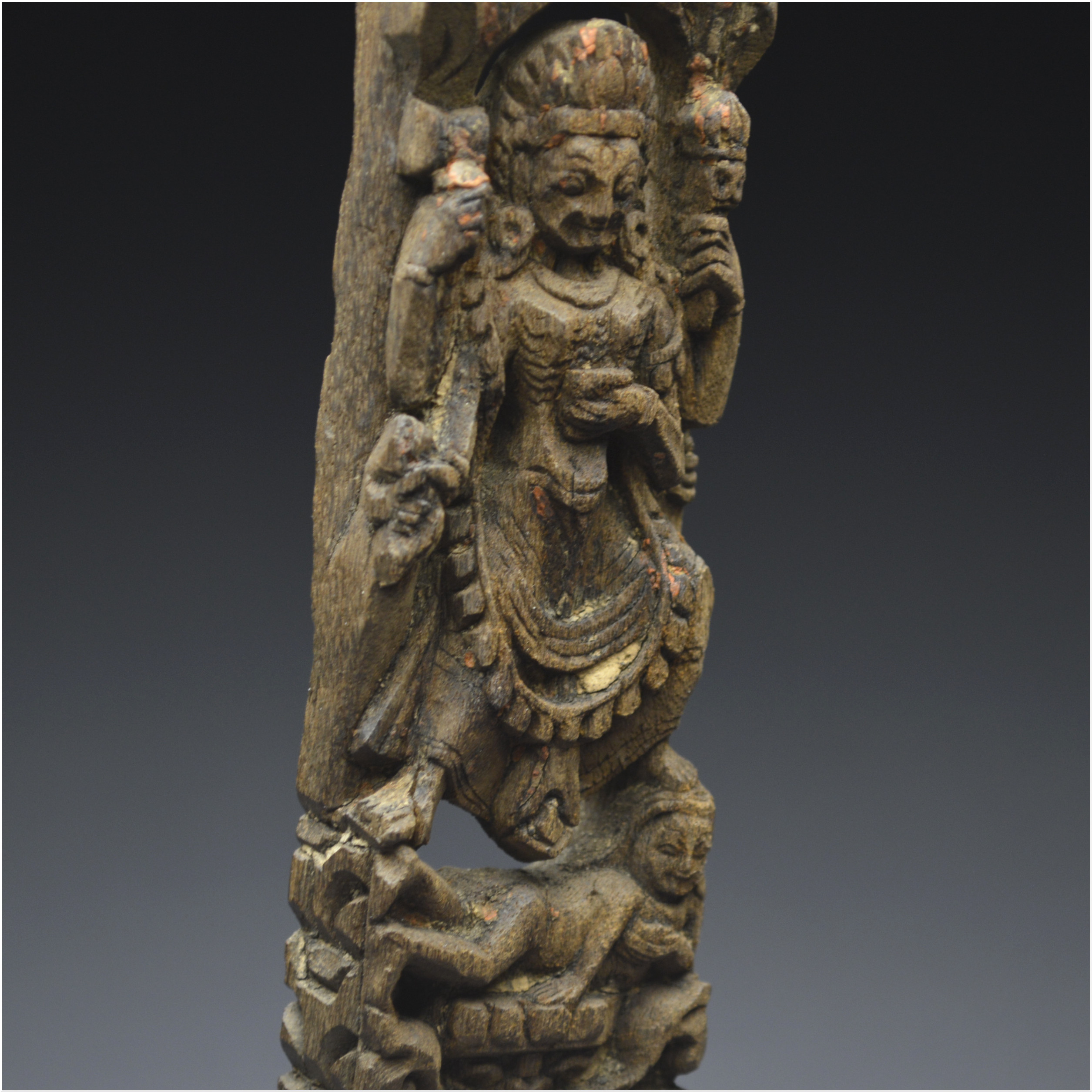


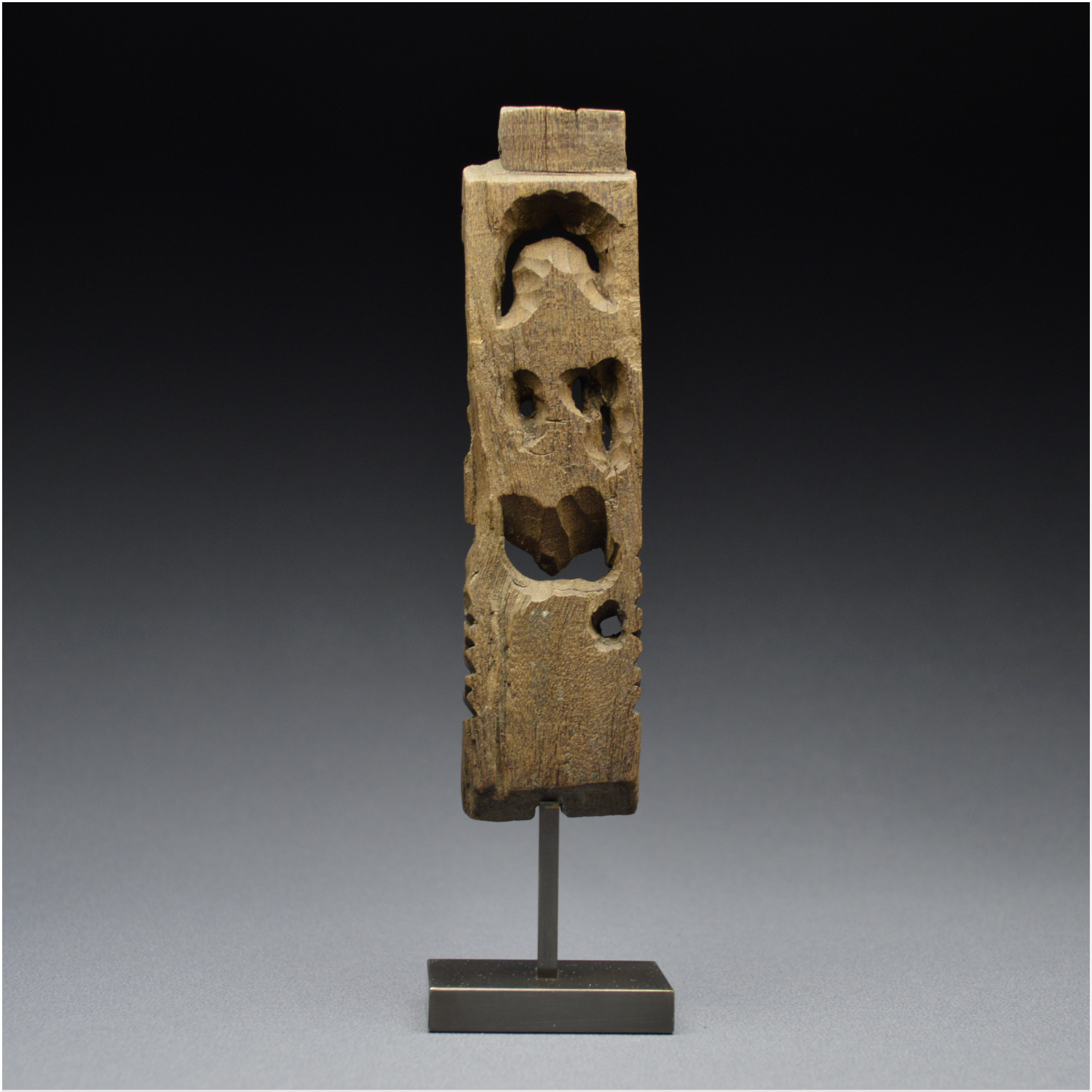
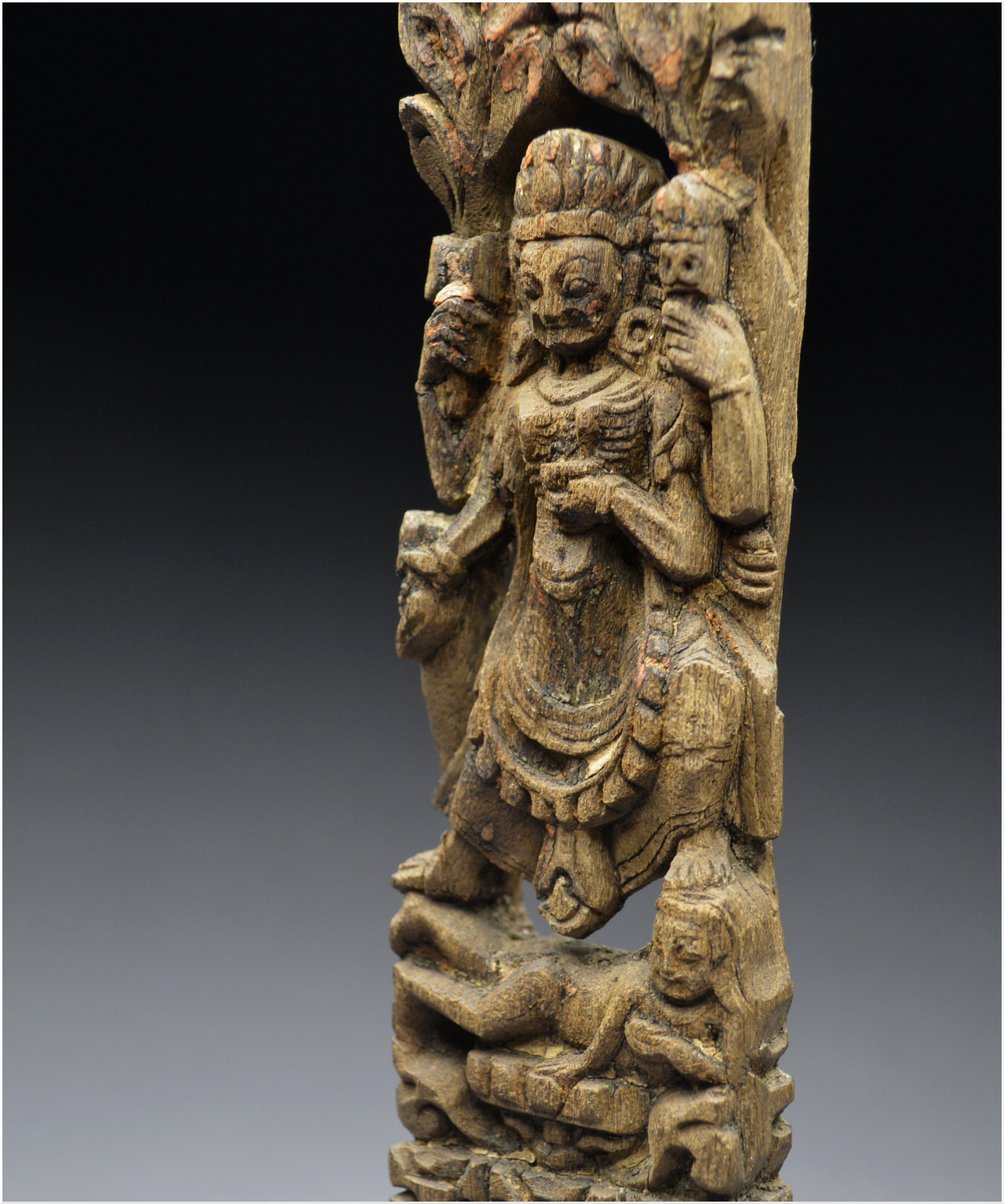
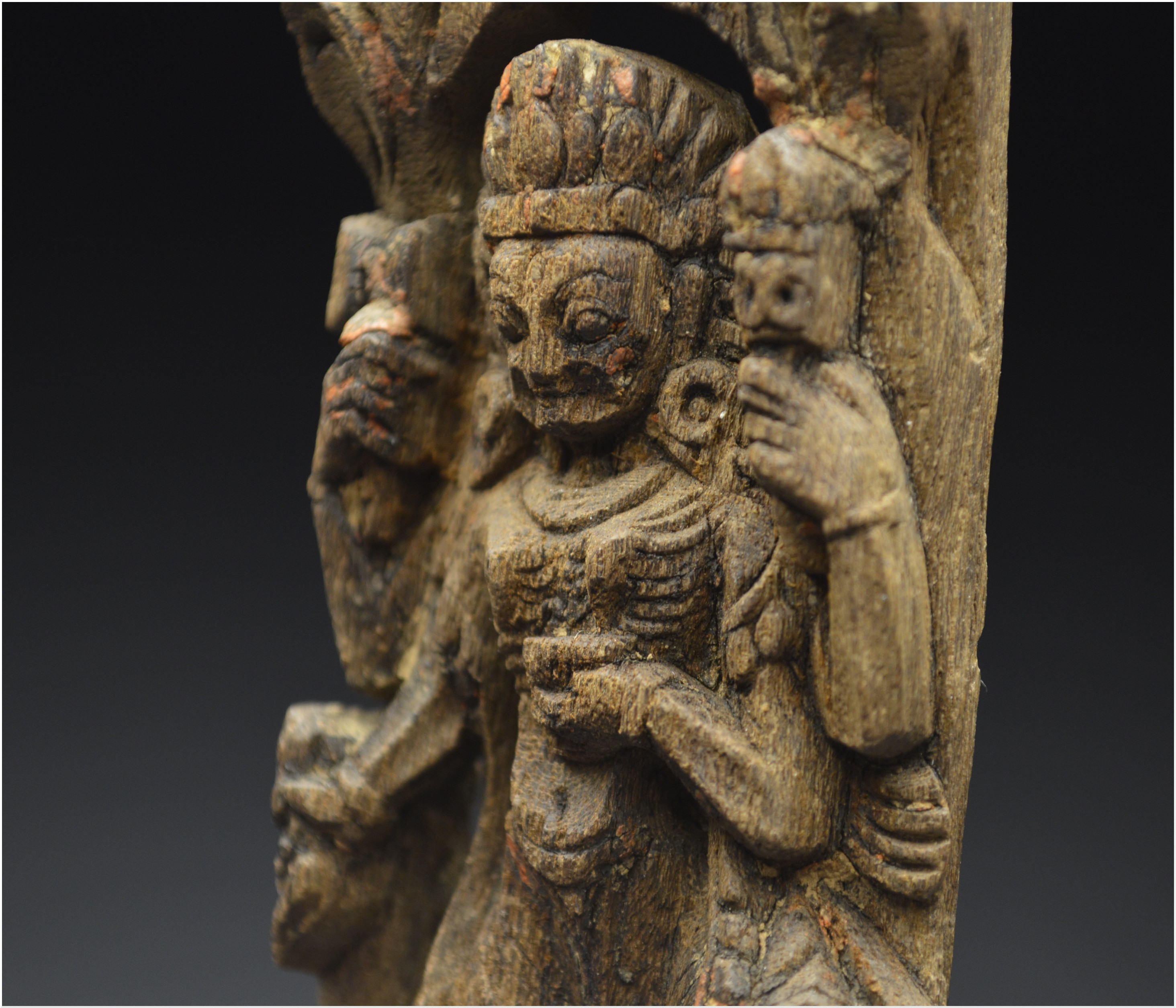
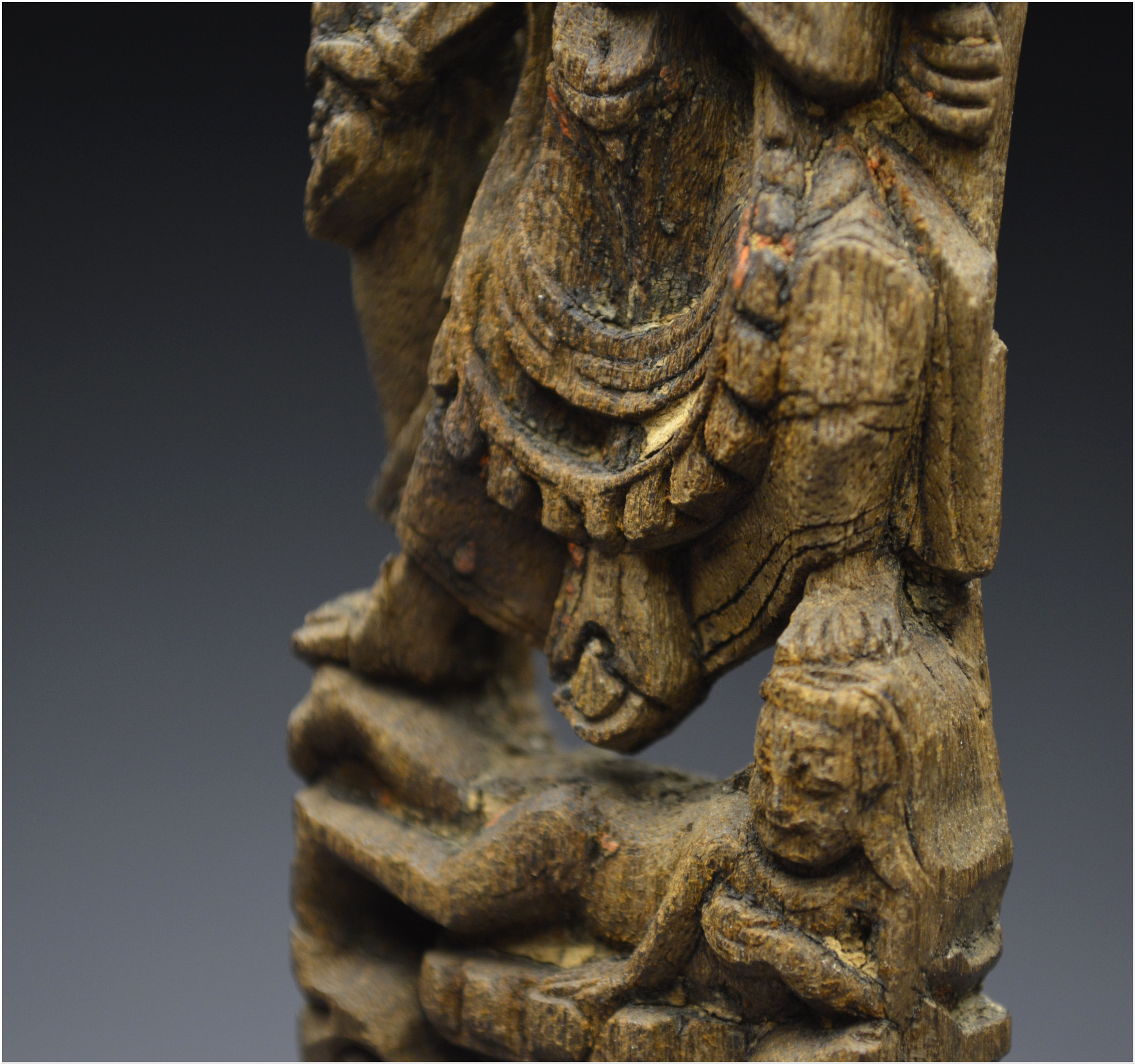

Nepal, forse Valle di Kathmandu XVI-XVII secolo Scultura in legno di Kali nel suo aspetto Chamunda Legno con tracce di policromia Base in bronzo Usura normale 18 x 4,2 cm esclusa base Collezione privata Rara rappresentazione di Kali nel suo aspetto Chamunda. È rappresentata in una forma terrificante, il volto emaciato ornato del terzo occhio, il corpo scheletrico con il petto cadente e l’addome cavo, gli occhi sporgenti, la bocca dal ghigno pronunciato. Ella è raffigurata in piedi sotto il fogliame, appollaiata su un demone (simbolo di ignoranza, illusione) nell’atteggiamento alidha (sdoppiato verso sinistra), quest’ultimo rappresentato disteso a pancia in giù, la gamba sinistra appoggiata sulla gamba destra, il braccio sinistro piegato, il braccio destro teso, la mano appoggiata a terra. La dea vestita con un semplice dothi indossa un’alta tiara, grandi orecchini circolari che cadono sulle spalle. È adornata con una lunga ghirlanda fatta di teschi umani (mundamala) e una collana e braccialetti sulle braccia e sui polsi. La divinità è ornata con quattro braccia che brandiscono un kapala (teschio umano che funge da coppa), un kartri (mannaia), un trishula (tridente) decorato con un teschio e un damaru (tamburo). L’intero pezzo è di alta qualità di esecuzione, cosa degna di nota per un pezzo di queste dimensioni.
Dimensione :
- Altezza : 18 cm hors socle cm
- Larghezza : 4.2 cm hors socle cm
Dimensione :
- Altezza : 18 cm hors socle cm
- Larghezza : 4.2 cm hors socle cm
Questa descrizione è stata tradotta automaticamente. Clicca qui per vedere la versione originale EN
In vendita
Prezzo :
799 € Tasse incluse.
Spese e tasse comprese
Consegna France:
18.50 € Tasse incluse. (*)
Prezzi per paese, clicca su Vedi
Visualizza
Hotline
Non esitate a chiamarci per qualsiasi richiesta
Altri articoli nella categoria « Sculture »
Ti potrebbe piacere anche
