

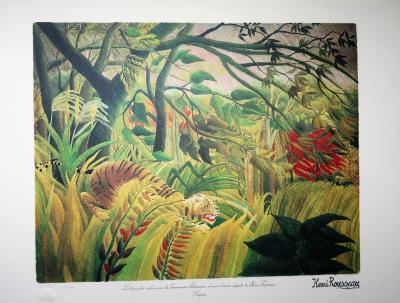
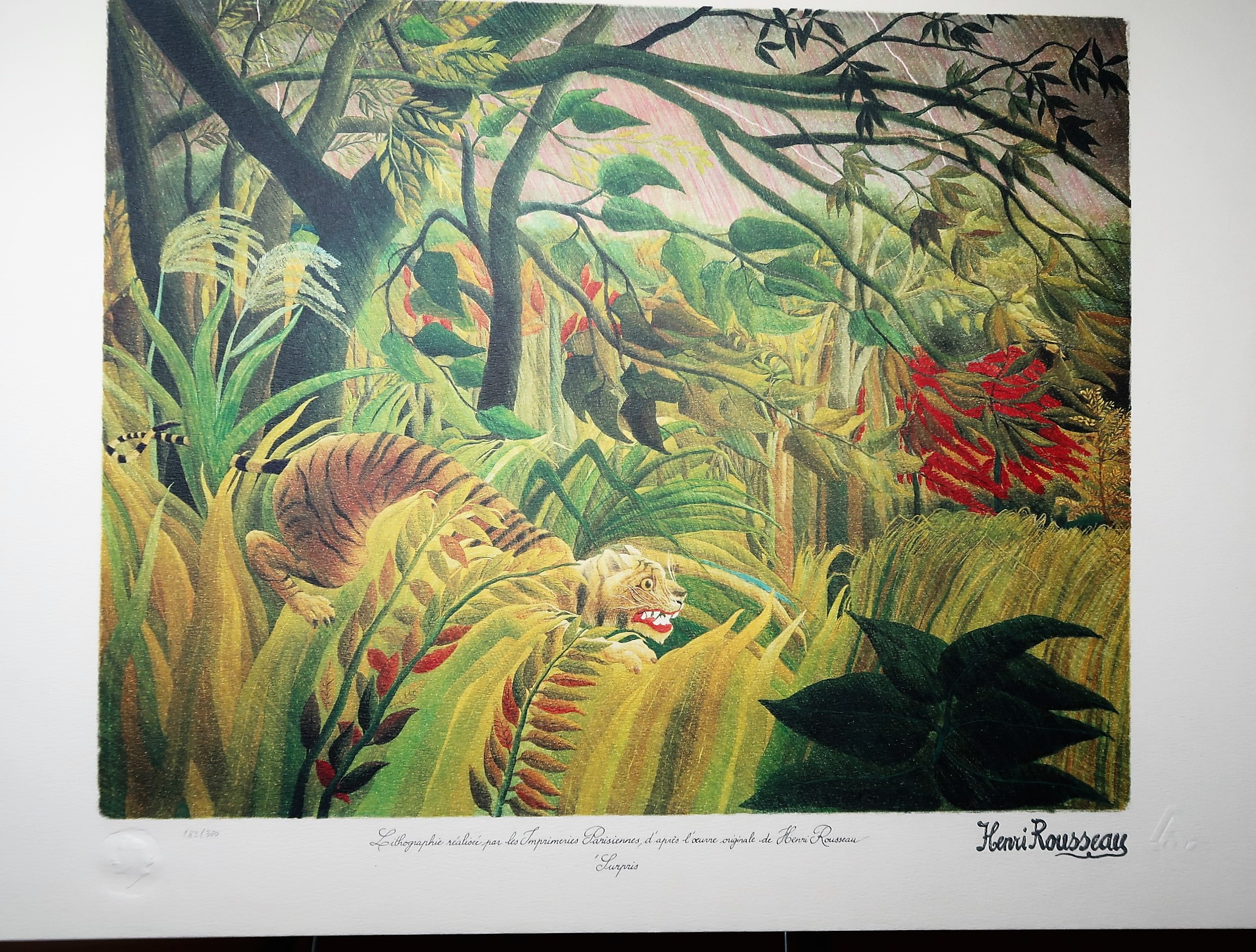
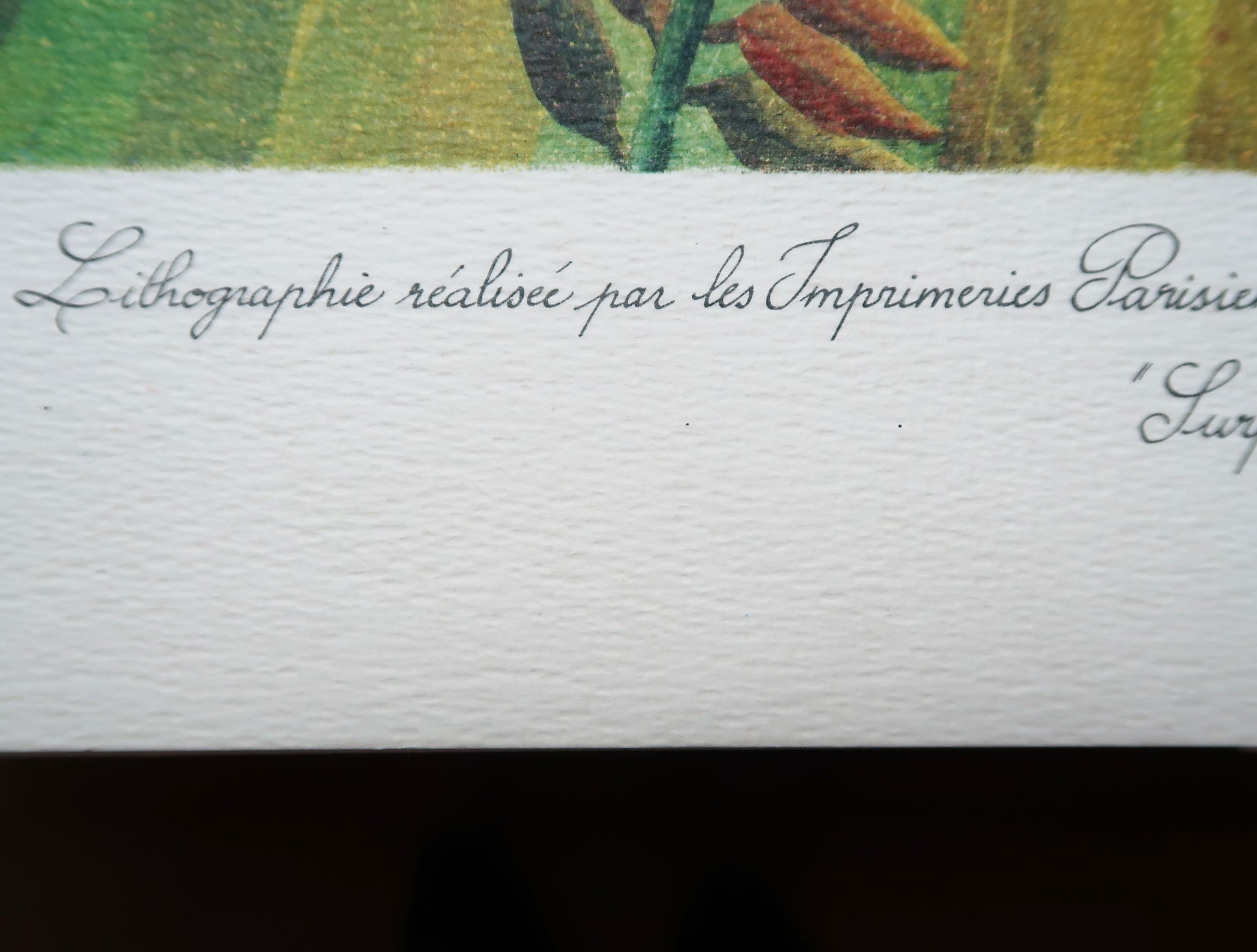
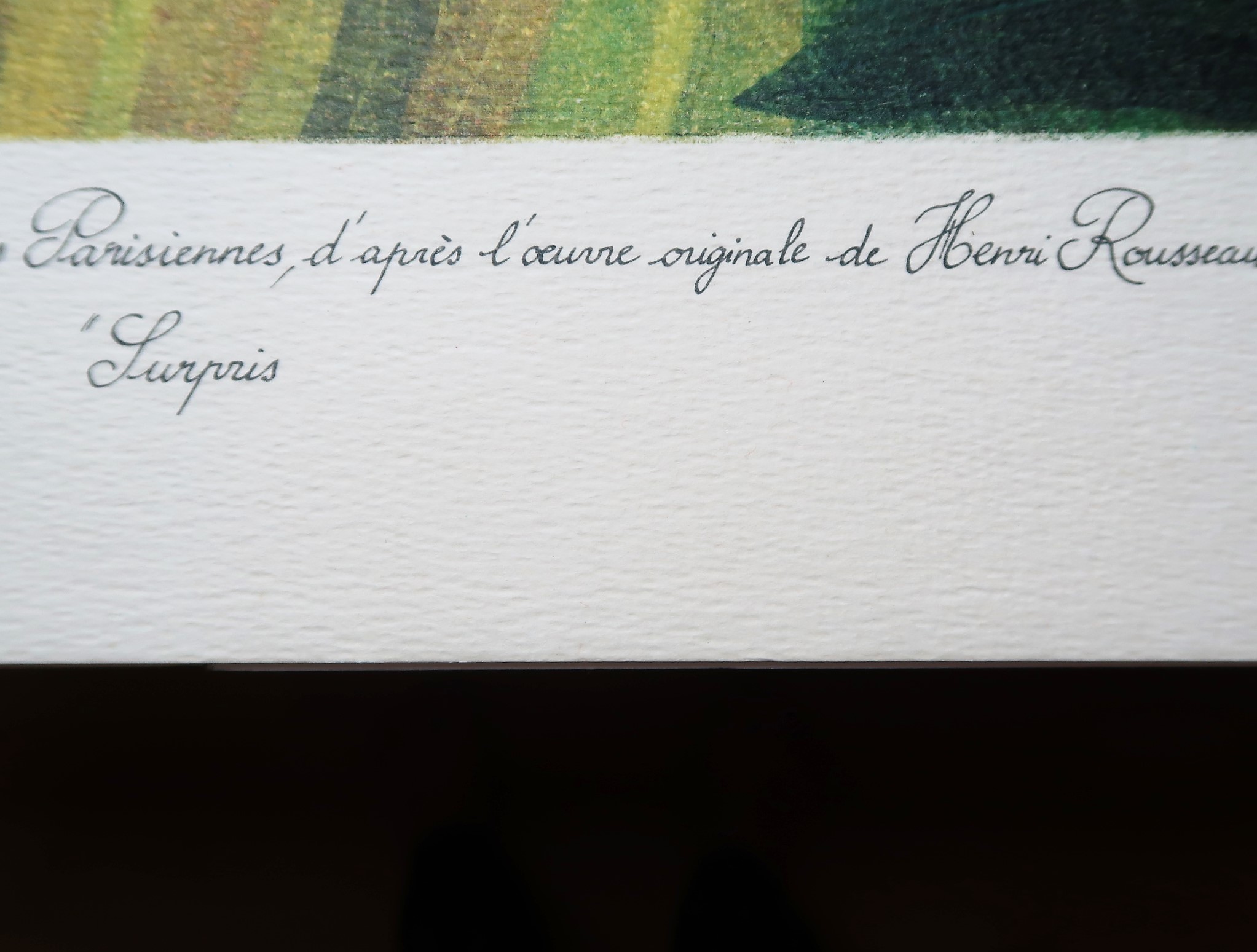
Henri Rousseau (1844-1910) - Surprised, lithograph
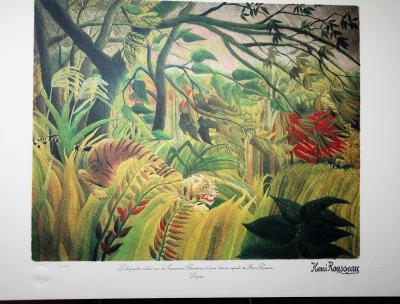
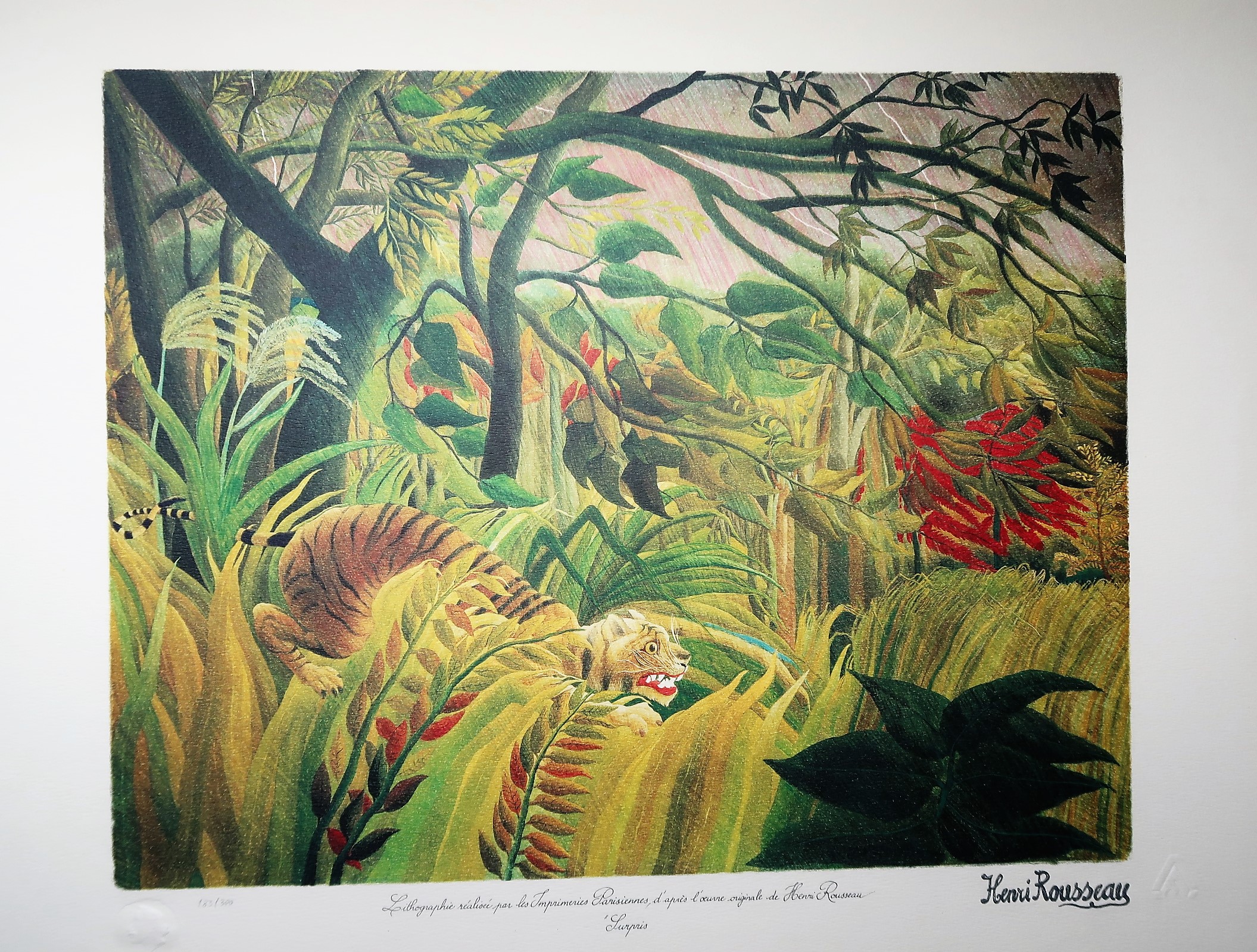

Surprised
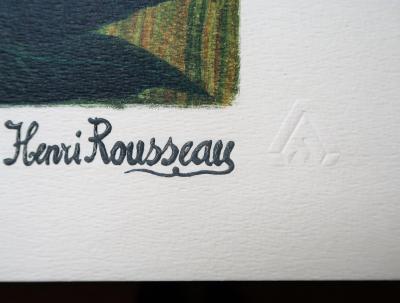
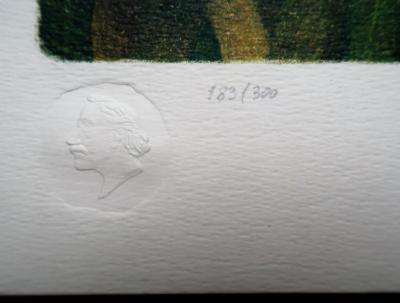
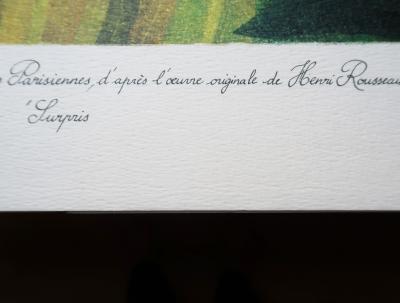
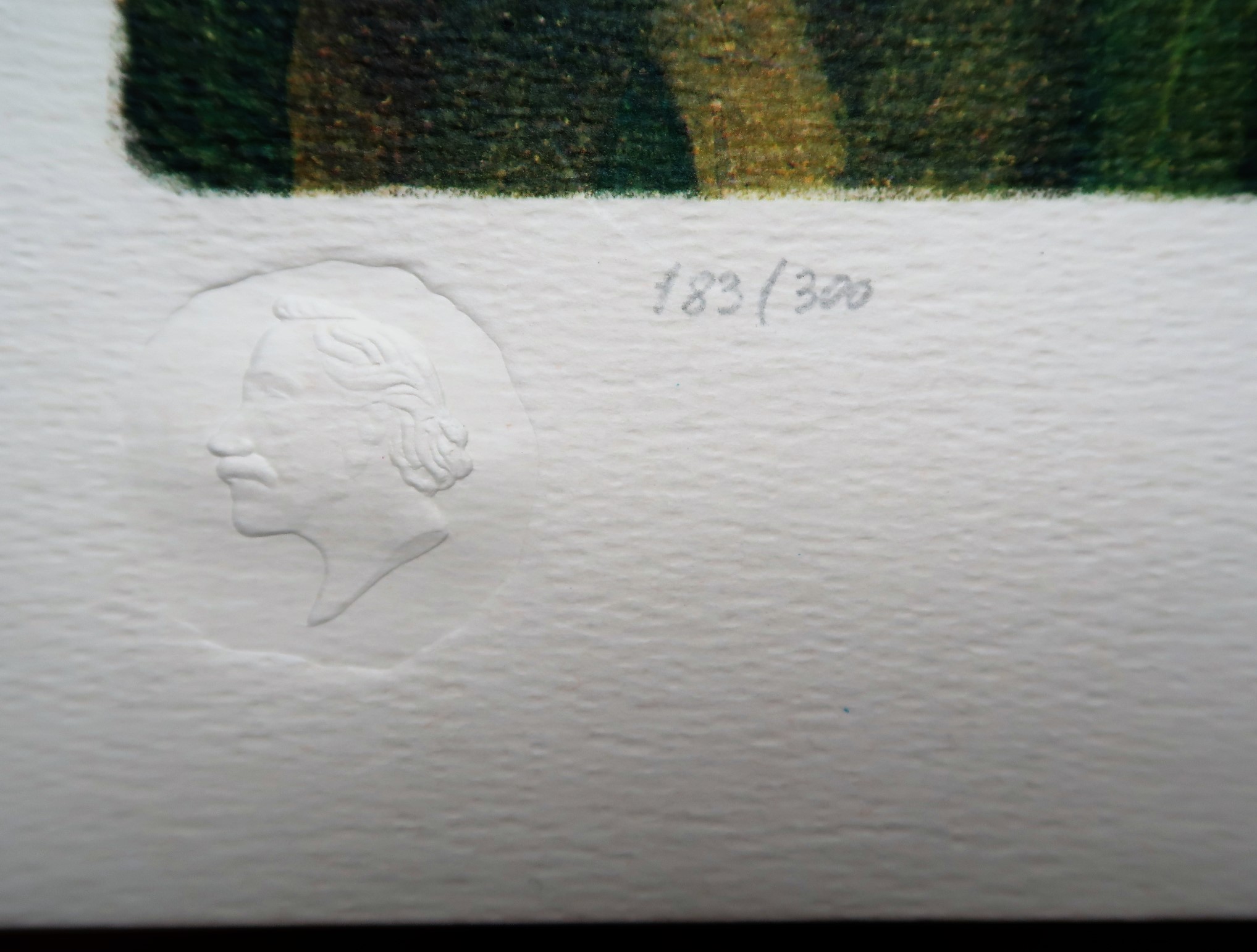
Original lithograph, handsigned and numbered- 183 / 300 copies
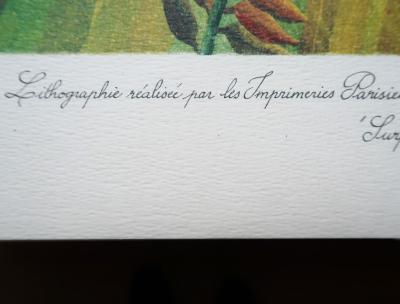
Lithograph on stone
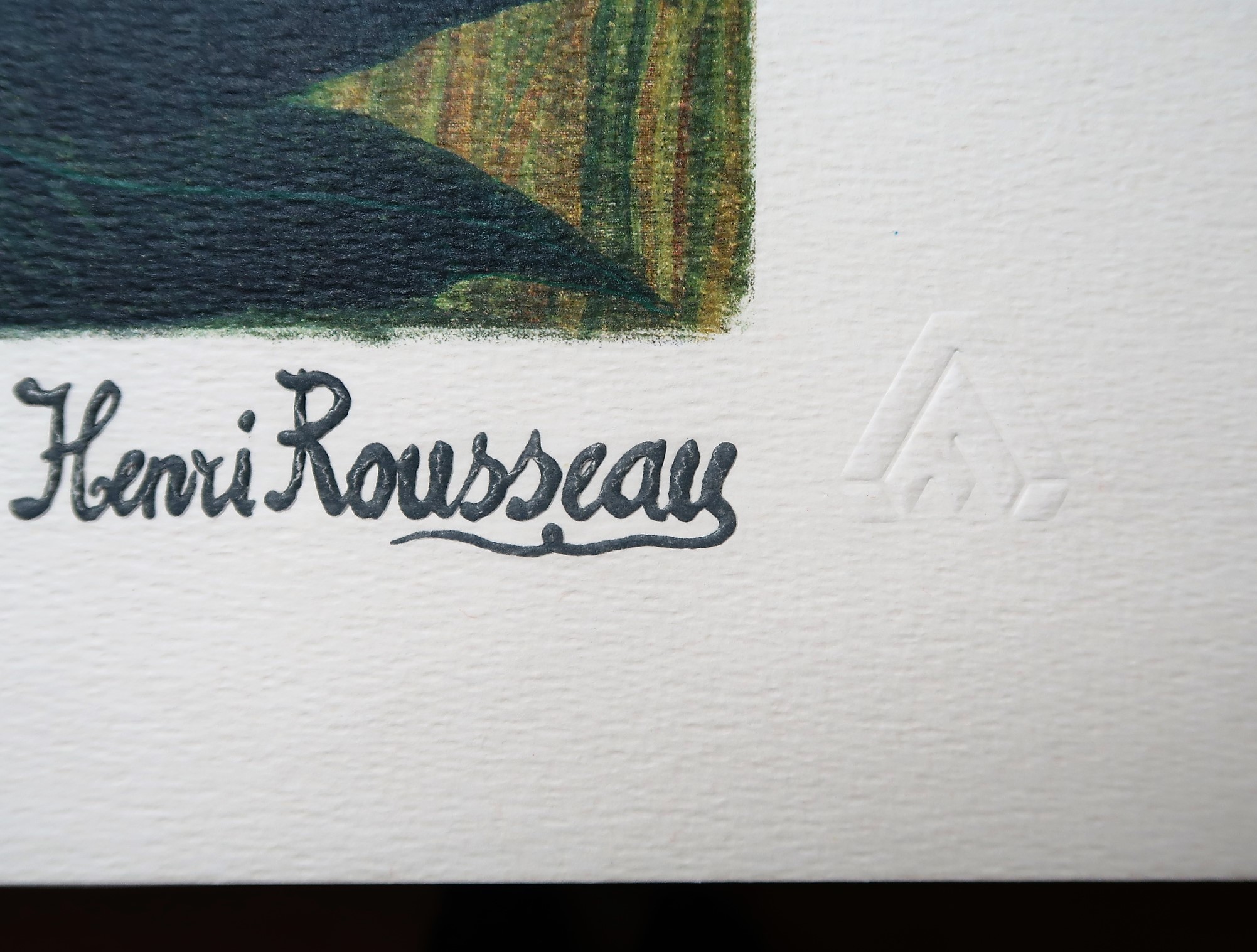
Signed in the plate
Authenticated by the dry stamp of the artist's profile
Numbered in pencil 183/300 copies
On pure wove cloth
Dimensions: 57 x 75 cm approximately
Biography:
He was nicknamed "Le Douanier" because he worked at customs. His work remained unnoticed for a long time, but once discovered, he was hailed for his artistic quality.
Henri Rousseau was born in Laval. He took up his duties in the army and worked in a toll station on the outskirts of Paris. It was only at the age of forty that he began to paint. He had no artistic education and was therefore able to work without being restrained by the traditions of classical training. During his life, his work was not appreciated and was even ridiculed, but Rousseau himself always believed in his art. He tried to work in the style of Ingres' supporters, but he never succeeded. He has criticized his childish style a lot and has been accused of being a little anxious. However, if you look closer at his work, you can see that his way of painting is very refined.
His work was also appreciated precisely because of its innocent primitive qualities. The Spanish painters first noticed it and counted it as part of the avant-garde. In 1908, Pablo Picasso organized a banquet as a tribute to Henri Rousseau. They made fun of him with medals.
Rousseau has never left France and must have been inspired by illustrated books and botanical gardens. Incidentally, he claimed to have been sent to Mexico during his military service. Henri Rousseau died at the age of sixty-six.
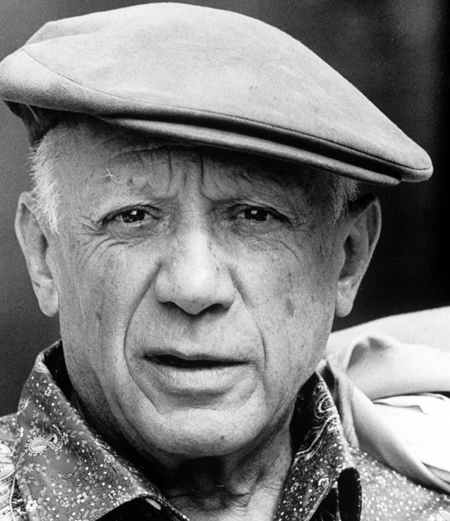 Pablo Picasso :
Pablo Ruiz Picasso is one of the greatest artists of the 20th century.
Born in Malaga in 1881, he arrives at Barcelona at 15 and makes his first exposition five years later. He established himself at "Bateau-Lavoir" studio in Paris (Montmartre) in 1904. His early paintings are classical at that time and divided by periods, the "blue period" (1901-1904) followed by the "pink period" (1904-1906).
Marked by new influences (Ingres, Cézanne, Gauguin) and new meetings (Matisses, Braques, Derain), Picasso's painting made a radical turn clearly perceptible in his "Demoiselles d’Avignon" (1906-1907). This geometrization which quickly became fragmentation, followed by Braque, announced the birth of Cubism. In this revolutionary artistic impulsion, the year 1911 is marked by the first "papiers collés" of the art History. His native Spain clearly influenced his works between 1930-1944. Affected by the Civil War, he awaked himself to militancy with "Guernica", 1937. A same anxiety can be felt through his parisian works during Second World War ("Still life with steer skull", 1942). His setting in the south of France and his membership to the Communist Party in 1944 gives way to hope in his painting ("La joie de vivre", 1946). Years 1950-1960 show the influence of contemporaries such as Matisse and great masters as Delacroix, Velázquez, Manet or David. He works until his death in Mougins, in 1973.
Pablo Picasso :
Pablo Ruiz Picasso is one of the greatest artists of the 20th century.
Born in Malaga in 1881, he arrives at Barcelona at 15 and makes his first exposition five years later. He established himself at "Bateau-Lavoir" studio in Paris (Montmartre) in 1904. His early paintings are classical at that time and divided by periods, the "blue period" (1901-1904) followed by the "pink period" (1904-1906).
Marked by new influences (Ingres, Cézanne, Gauguin) and new meetings (Matisses, Braques, Derain), Picasso's painting made a radical turn clearly perceptible in his "Demoiselles d’Avignon" (1906-1907). This geometrization which quickly became fragmentation, followed by Braque, announced the birth of Cubism. In this revolutionary artistic impulsion, the year 1911 is marked by the first "papiers collés" of the art History. His native Spain clearly influenced his works between 1930-1944. Affected by the Civil War, he awaked himself to militancy with "Guernica", 1937. A same anxiety can be felt through his parisian works during Second World War ("Still life with steer skull", 1942). His setting in the south of France and his membership to the Communist Party in 1944 gives way to hope in his painting ("La joie de vivre", 1946). Years 1950-1960 show the influence of contemporaries such as Matisse and great masters as Delacroix, Velázquez, Manet or David. He works until his death in Mougins, in 1973.
-
Create an alert
Please subscribe to our free alert service to be notified when a similar item is available on the website.
This item is not available. Please click on « View the catalog » to see similar items available.
